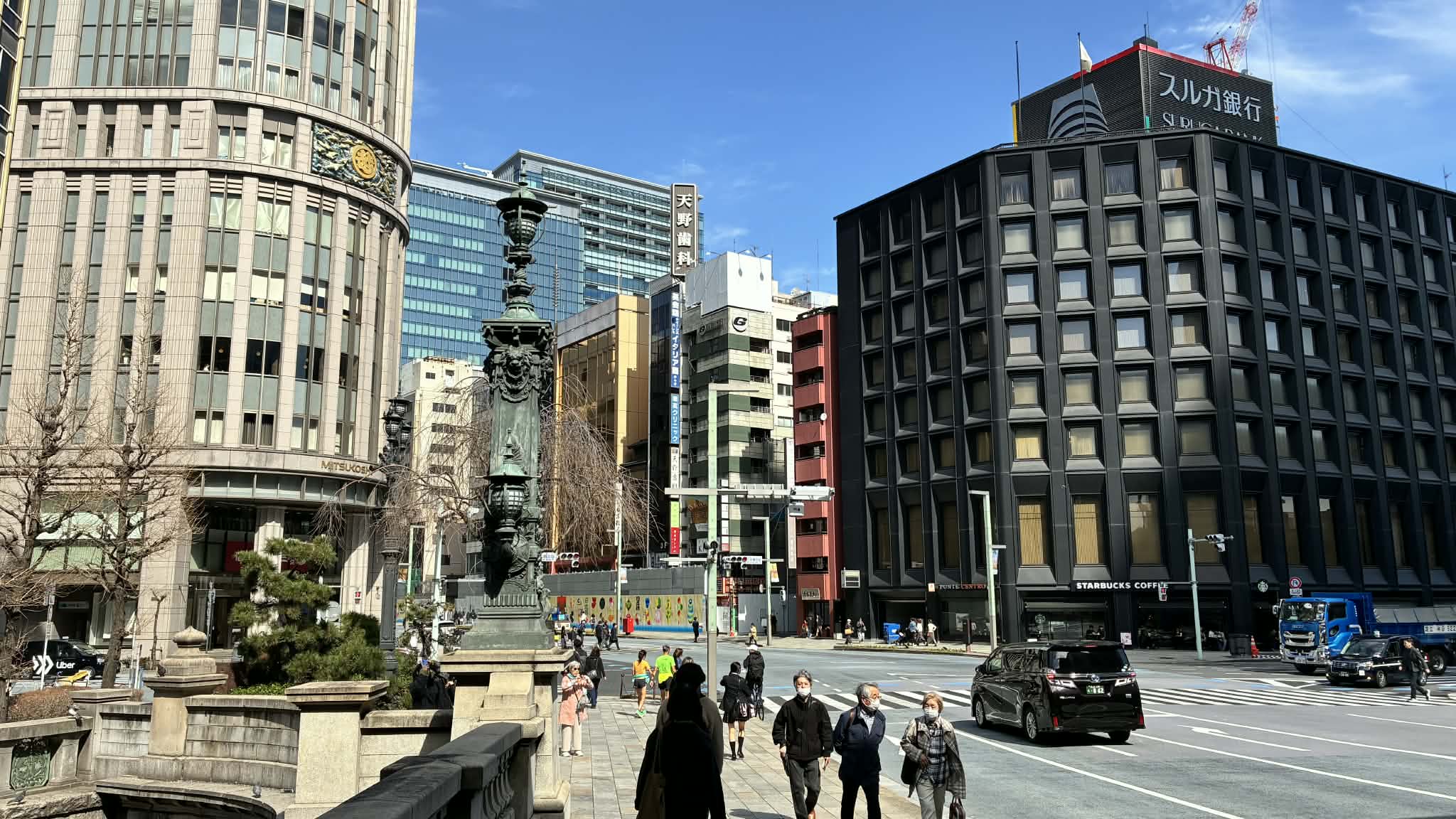

In the Edo period, every journey on the Nakasendo began in the same place: Nihonbashi. Before travelers reached the mountain roads, post towns, and famous inland route that would eventually lead toward Kyoto, they first had to make their way out of Edo itself. That opening stretch — from Nihonbashi north toward Sugamo — may not be as famous as the later stages of the road, but it offers one of the most revealing glimpses into how travel, commerce, and everyday life worked in Tokugawa Japan.
Today, this route survives not as a preserved trail through fields and villages, but as something more interesting: a historical path still woven into the living city.
The Nakasendo was one of the Five Highways established by the Tokugawa shogunate. Running inland between Edo and Kyoto, it was used by daimyo, officials, merchants, pilgrims, and common travelers. While many people today know the Tokaido better, the Nakasendo played an equally important role in connecting the political center of Japan with the provinces beyond.
And like all of Edo’s great roads, it began at Nihonbashi.
Nihonbashi was more than a bridge. It was the symbolic and practical center of the shogun’s capital — the point from which distances were measured and from which official journeys began. Goods arrived here, information spread from here, and travelers departed from here. To stand at Nihonbashi in the Edo period was to stand at the center of movement itself.
For anyone beginning their walk on the nakasendo
The first part of the journey was not yet about remote mountain inns or dramatic landscapes. It was about leaving the crowded heart of the city behind.
That first stretch northward would have taken travelers through the layered world of Edo: merchant quarters, roadside businesses, temple districts, and neighborhoods shaped by constant movement. Samurai processions traveling under the sankin-kotai system would have passed this way. So too would porters carrying luggage, pilgrims heading toward distant shrines, and merchants setting out on journeys that could last weeks.
This is what makes the Nihonbashi to Sugamo route so compelling today. It shows that Japan’s historical highways were not only country roads — they were also urban arteries, deeply tied to the daily life of the city.
As walkers move north, the atmosphere gradually shifts. The commercial energy of central Edo gives way to a road that feels increasingly transitional — a route that once connected the capital to the wider world. Even though modern Tokyo has transformed the surroundings, the historical logic of the road still remains. You are not simply walking through neighborhoods. You are following one of the main exit lines of the shogun’s city.
Sugamo is a particularly meaningful destination for this first stage. Today it is often associated with local shopping streets and temple visitors, but historically it also sat within the flow of movement that defined the old Nakasendo corridor. It represents an important threshold: not quite the distant countryside, but no longer the dense political center of Edo either.
That in-between quality is exactly what makes this walk so rich.
Unlike some historical destinations that require a lot of imagination, this route rewards attention. A street alignment, a temple approach, a neighborhood pattern, or a surviving place name can suddenly reveal the deeper structure of Edo beneath the modern city. The experience is less about “seeing ruins” and more about learning how to read the city historically.
And that is where walking with context matters.
Without the stories, the route can look like ordinary Tokyo streets. But once you understand who traveled here, why Nihonbashi mattered, how the shogunate organized movement, and what it meant to leave Edo on foot, the road becomes something else entirely. It becomes the opening chapter of one of Japan’s great historical journeys.
For travelers interested in Japanese history, urban history, or simply seeing a different side of Tokyo, walking from Nihonbashi to Sugamo offers a rare experience: the chance to trace the beginning of the old Nakasendo where it truly started — inside the living fabric of Edo itself.
If you want to experience this route not just as a walk, but as a historical journey, our guided Edo walking tour follows this first stretch of the old Nakasendo and brings the road back to life.
Leave a Reply