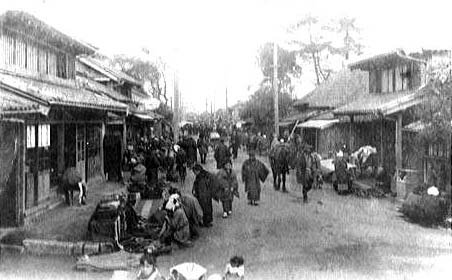

When people imagine travel in Edo-period Japan, they often picture elegant woodblock prints: travelers in straw hats walking beneath Mount Fuji, crossing bridges, or stopping at scenic post towns. But what was travel actually like for the people who used Japan’s great highways?
The reality was less romantic — and much more interesting.
For travelers leaving Edo on roads like the Nakasendo or Tokaido, a journey was not simply a matter of choosing a destination and setting off. Travel in Tokugawa Japan was shaped by rules, social class, money, weather, physical endurance, and the rhythms of life on the road. Whether someone was a samurai official, a merchant, a pilgrim, or an ordinary commoner, travel required preparation and patience.
One of the first things travelers had to think about was where they would sleep.
Along the major highways, people stayed in post towns known as shukuba. These towns developed to support movement between Edo and the rest of Japan, and they offered lodging, food, supplies, horses, and porters. Some inns were modest and practical, while others catered to wealthier or higher-ranking guests. Official travelers such as daimyō and their retainers often stayed in accommodations suited to their status, while ordinary travelers made do with simpler lodgings.
An inn was more than just a place to sleep. It was where travelers ate, rested sore feet, dried wet clothing, exchanged information, and prepared for the next day’s journey. On long routes, the inn became part of the rhythm of travel itself.
And travel was rarely light.
People moving along Edo Japan’s roads carried far less than modern tourists, but even a small load became heavy when carried for days or weeks. Clothing, sandals, money, travel documents, and daily necessities all had to be packed and transported. Wealthier travelers could hire porters or arrange for horses, while others carried their belongings themselves.
This was especially true for official travel. Under the sankin-kotai system, daimyo were required to travel between their domains and Edo in large processions. These journeys involved not only the lord himself, but also retainers, servants, luggage, equipment, and all the visible signs of status expected in Tokugawa society. The great roads of Japan were not empty scenic routes — they were busy corridors of movement, labor, and hierarchy.
For ordinary travelers, conditions could be difficult. Roads were walked mostly on foot. Distances were long. Weather mattered. Summer heat, rain, mud, and winter cold could all shape the experience of a journey. A traveler’s sandals wore down. Feet blistered. Clothing became damp. Even a relatively short stage between post towns could feel demanding after repeated days on the road.
Interesting Encounters and cultural exchange
At the same time, travel also brought a sense of encounter and change. The road exposed people to different regions, dialects, foods, customs, and landscapes. It connected city and countryside, center and province, official power and ordinary life.
That is part of what made roads like the Nakasendo so important.
For someone leaving Edo from Nihonbashi, the journey began not in some distant mountain village, but in the crowded, structured world of the shogun’s capital. Before travelers reached famous post towns farther inland, they first passed through the northern edge of the city itself — along the same urban roadways that linked commerce, administration, and movement.
This first stage mattered.
It reminds us that Edo-period travel was not only about destinations. It was about transition: leaving the center of power, entering the road, and adjusting to the practical realities of travel step by step.
Today, it is easy to overlook how physically demanding and socially complex these journeys once were. But understanding inns, luggage, road rules, and the everyday logistics of movement helps bring Edo history back to life. The old highways were not simply lines on a map. They were lived spaces, shaped by the people who walked them.
And that is one of the most fascinating things about walking the old routes today. What may first look like an ordinary street or neighborhood can become something much richer once you understand who once passed through it — and what it actually took to travel that road.
Leave a Reply